Origami isn’t just paper folding; it’s a magical journey that transforms a simple sheet into playful creatures and whimsical shapes. Imagine a world where kids can turn a flat piece of paper into a soaring crane or a delightful frog with just a few folds. It’s like giving them a superpower, minus the cape and questionable spandex.
Not only does origami spark creativity, but it also sharpens fine motor skills and boosts concentration. Who knew that turning paper into art could be a sneaky way to enhance learning? So grab some colorful paper and let the fun begin! With simple origami projects, kids can unleash their inner artists while having a blast. Get ready for giggles, surprises, and maybe even a few paper airplane competitions.
Benefits Of Simple Origami For Kids
Simple origami offers several advantages for children, enriching their development while providing fun. This activity encourages engagement and results in various educational benefits.
Enhancing Fine Motor Skills
Fine motor skills develop through the precise folds and manipulations involved in origami. Each fold reinforces hand-eye coordination and dexterity. Children learn to navigate tools like scissors and markers seamlessly while assembling their projects. As they refine these skills, they become more adept in other tasks such as writing or drawing. Simple origami also requires focus, allowing kids to practice patience and perseverance through each step of their creations.
Boosting Creativity And Imagination
Origami fosters creativity by encouraging children to visualize and create unique designs. Kids experiment with various shapes, colors, and patterns, leading to imaginative thinking. Simple projects, like paper cranes or frogs, inspire them to invent their own models. The tactile experience of folding paper stimulates artistic expression and allows for personal interpretation. As children create, they experience a sense of accomplishment, enhancing their confidence and willingness to explore new ideas further.
Essential Materials For Simple Origami
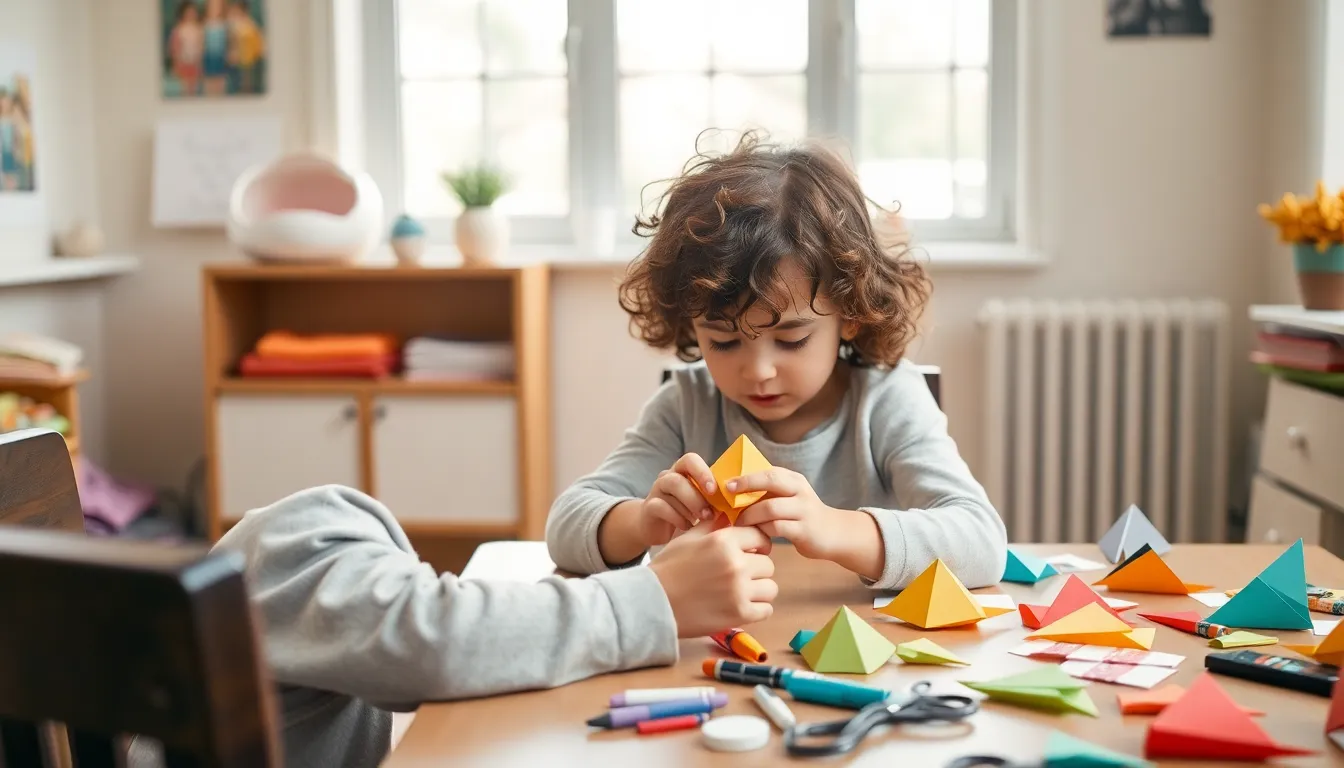
Engaging in simple origami requires minimal materials, making it accessible for children. Understanding the appropriate types of paper and additional tools enhances the origami experience.
Paper Types And Sizes
Origami paper comes in various types, each providing unique qualities. Standard origami paper holds a weight of 70-80 gsm, offering the right balance between flexibility and sturdiness. Additionally, children can use printer paper or craft paper cut into squares, ensuring ample surface area for folding. Teens and adults may also enjoy using specialty papers, like washi or foil, which add texture and visual appeal. For beginners, squares measuring 6 inches often work well, promoting easier folds.
Additional Tools
While paper remains the primary material for origami, a few extra tools can simplify the process. A bone folder helps achieve crisp, precise folds, enhancing the overall design. Scissors may assist in cutting paper into specific sizes when necessary. Markers help personalize finished pieces, adding creative touches. A ruler serves to create accurate lengths and folds, ensuring consistency. Lastly, a flat, clean surface encourages stable folding, minimizing frustration during projects.
Step-By-Step Guide To Simple Origami Projects
Explore simple origami projects for kids with clear instructions and engaging designs. Each project encourages creativity while enhancing fine motor skills.
Easy Origami Animals
Start with a paper crane. This classic design requires only one square sheet of paper. Fold it in half diagonally, create a kite shape, then make precise folds to form the wings. The resulting crane symbolizes peace and is fun to display. Another popular choice is the origami frog. Simple folds turn a square into a hopping frog. Kids enjoy launching the frog across a table once it’s completed, making this project interactive and fun.
Fun Origami Shapes
Create an origami star using a few quick steps. Fold a paper square into triangles, then assemble those triangles to form a star shape. This project enhances spatial awareness and can be used for decoration. Another enjoyable shape is the origami heart. Fold a square paper, starting with a kite shape, then develop the curves of the heart. This design is perfect for gift-giving or personal notes, adding a thoughtful touch to any occasion.
Tips For Teaching Kids Origami
Teaching kids origami provides an opportunity to foster creativity and skill development. Keeping a few key strategies in mind enhances the learning experience.
Creating A Positive Learning Environment
Setting up a supportive atmosphere makes a significant difference in learning. Bright colors or patterns on the paper can inspire enthusiasm. A clean, organized workspace allows kids to focus on their projects without distractions. Encouragement plays a critical role; praising efforts boosts confidence, even if the outcome isn’t perfect. Having sufficient light helps them see the folds and details clearly, improving overall results.
Encouraging Patience And Persistence
Cultivating patience proves essential in mastering origami. Teaching children that mistakes are part of learning encourages resilience. Showing them how to step back from challenging folds helps reduce frustration. Reinforcing the idea that practice leads to improvement instills determination. Allowing extra time for complex designs fosters a sense of achievement when completed. Breaking projects into smaller steps makes complicated tasks manageable, leading to successful outcomes.
Conclusion
Simple origami offers a delightful way for kids to explore their creativity while developing essential skills. As they fold paper into charming shapes and figures, they not only engage their imaginations but also enhance their fine motor skills and concentration. This hands-on activity encourages patience and resilience as children learn to navigate challenges through practice.
By providing accessible materials and encouraging a supportive environment, parents and educators can inspire a love for origami that lasts a lifetime. Whether it’s crafting a paper crane or an origami frog, each project is an opportunity for laughter and learning. Embracing the art of origami opens up a world of possibilities for young minds, making it a valuable addition to any child’s playtime.