In a world buzzing with creativity, insect crafts for children offer a delightful way to combine fun and learning. Who knew that those creepy crawlies could inspire such amazing projects? From paper plate ladybugs to colorful caterpillars, these crafts not only keep little hands busy but also spark curiosity about the fascinating world of bugs.
Overview of Insect Crafts for Children
Insect crafts serve as an exciting avenue for children to explore creativity while learning about nature. Engaging in projects like making paper plate ladybugs or colorful caterpillars sparks imagination and provides hands-on experience. Many popular crafts incorporate simple materials, allowing kids to utilize items such as construction paper, glue, and paints.
Customize projects to cater to different age groups and skill levels. Younger children may enjoy creating simple insects using stickers and pre-cut templates. Older kids might find it rewarding to assemble intricate models or create educational displays. These crafts not only enhance fine motor skills but also nurture problem-solving abilities through design and construction.
Integrating educational themes into crafts boosts learning outcomes. By discussing the life cycle of butterflies while crafting, children gain a better understanding of biological concepts. Various crafts can address specific topics like the importance of insects in ecosystems or their role in pollination.
Teachers and parents can incorporate insect-themed activities into classrooms or home settings. Craft sessions can easily complement science lessons or serve as fun weekend projects. Additionally, themed craft kits available on the market simplify the process, providing all necessary materials and instructions.
Using insect crafts promotes teamwork and social skills as children often work together on group projects. Sharing completed works fosters confidence and creativity while encouraging interaction with peers. By exploring the world of insects through crafts, children gain not only an appreciation for nature but also essential skills beneficial for future learning experiences.
Benefits of Insect Crafts
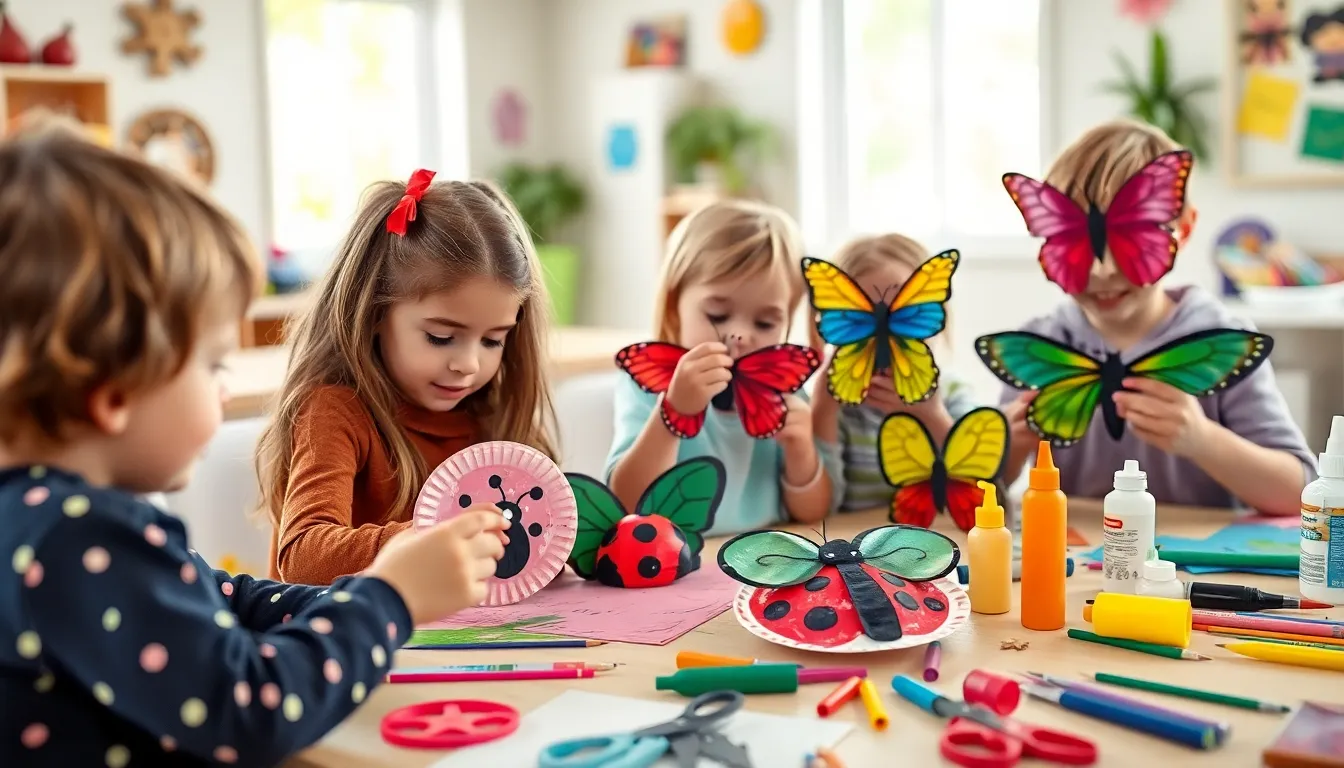
Insect crafts offer various benefits for children, combining fun with educational elements. Engaging in hands-on activities allows kids to express creativity while building important skills.
Enhancing Creativity
Creative expression thrives with insect crafts. Children use colors, shapes, and textures to bring their insect creations to life. Projects such as paper plate ladybugs stimulate imagination and provide opportunities for unique designs. Techniques like painting or collage introduce new artistic skills. Experiencing various craft methods encourages experimentation, leading to original ideas and personal styles. Crafting insects fosters problem-solving abilities, as kids learn to overcome challenges in their projects. Individual or group projects enhance self-confidence, making them proud of their artistic achievements.
Encouraging Learning
Insect crafts combine fun and education effectively. Through these activities, children learn about the life cycles of insects, such as butterflies. Discussions about habitats and ecosystems enrich understanding. Crafting materials come from nature, fostering awareness and appreciation for the environment. Engaging in teamwork promotes social skills, as children collaborate on projects and share ideas. Incorporating science themes into crafts reinforces knowledge retention. Insect crafts also enhance fine motor skills, as cutting, gluing, and assembling develop hand-eye coordination. This multi-faceted learning approach ensures kids retain valuable lessons while enjoying creative expression.
Popular Insect Craft Ideas
Insect crafts provide a fun way for children to engage creatively while learning about nature. Below are some popular craft ideas.
Paper Plate Insects
Making paper plate insects captures children’s imaginations. Kids can transform simple paper plates into vibrant ladybugs or butterflies using construction paper and paints. Adding googly eyes creates an interactive element, enhancing the finished product. Younger children find joy in easy designs, while older ones can experiment with advanced techniques like 3D features. This craft allows kids to express personal creativity and explore various color combinations.
Bug Puppets
Creating bug puppets stimulates creativity and storytelling in children. Using socks or paper bags, kids can craft their favorite insect characters. Decorations like yarn, felt, and glitter make these puppets unique and visually appealing. Encouraging imaginative play, kids can enact stories or skits, enhancing their verbal skills and confidence. This activity promotes teamwork during group projects, helping develop social interaction while crafting together.
Painted Rocks
Painting rocks introduces kids to nature artfully. Children can gather stones from their yard or park, making the connection to the natural world. Using non-toxic paints, they can decorate their rocks with fun bug designs, like ants or ladybugs. Finished rocks serve as garden decorations or gifts, offering children a sense of accomplishment. This craft fosters environmental awareness, as kids engage with outdoor materials and appreciate their surroundings.
Materials Needed for Insect Crafts
Insect crafts utilize various materials to spark creativity in children. Simple supplies yield endless possibilities for fun projects.
Common Craft Supplies
Children often use basic supplies, including construction paper, scissors, and glue. Markers and crayons serve as excellent tools for adding vibrant colors. Stickers and googly eyes enhance charm, bringing insects to life. Craft foam presents texture, making creations more engaging. Paint gives a unique touch when adding fine details to designs. Each of these materials offers versatility, allowing children to experiment while learning.
Eco-Friendly Options
Natural items offer great alternatives to conventional craft supplies. Leaves, twigs, and pebbles provide texture and character without packaging waste. Recycled paper transforms into unique insect creations while promoting sustainability. Cardboard from cereal boxes can serve as the base for intricate designs. Plant-based paints and glues reduce chemical usage, supporting a healthier environment. Combining creativity with eco-conscious choices fosters awareness of environmental responsibility in young crafters.
Tips for Successful Insect Crafts
Successful insect crafts require careful planning and attention to safety. Focusing on these aspects enhances the crafting experience for children.
Planning and Preparation
Gathering all necessary materials simplifies the crafting process. Create a list beforehand to ensure no important items get overlooked. Incorporate age-appropriate projects to match skill levels. Setting up a designated crafting space promotes organization and minimizes distractions. Plan for potential messes by covering surfaces with newspaper or a plastic sheet. Choose a theme or specific insect type to keep kids engaged and focused. Incorporating nature, such as leaf patterns or rock textures, adds a unique touch to each project.
Safety Precautions
Ensuring safety during crafting activities is essential. Using non-toxic materials minimizes health risks. Supervision is crucial for children using scissors or small items. Keeping sharp tools and glue out of reach helps prevent accidents. Encourage kids to wash hands before and after crafting to maintain hygiene. Setting clear rules regarding the use of materials promotes safe practices and responsibility. Establishing boundaries around workspaces prevents spills and messes. Provide aprons or old shirts to protect clothing from paint or glue stains.
Conclusion
Insect crafts offer a delightful blend of creativity and education for children. These hands-on activities not only spark imagination but also deepen their understanding of the natural world. By using simple materials and engaging in collaborative projects, kids can enhance their artistic skills while learning about insects and their ecosystems.
The joy of crafting insects fosters a sense of accomplishment and encourages teamwork. As children explore various techniques and themes, they build essential skills that extend beyond art. Embracing these insect crafts can lead to memorable experiences that inspire a lifelong appreciation for nature and creativity.